Welcome
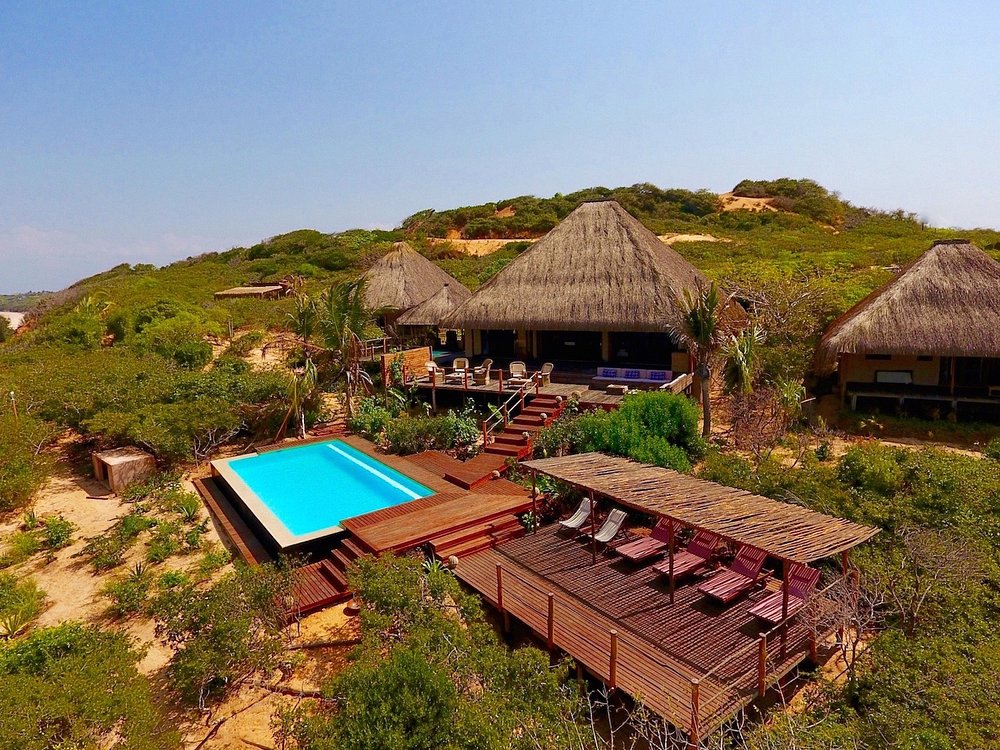
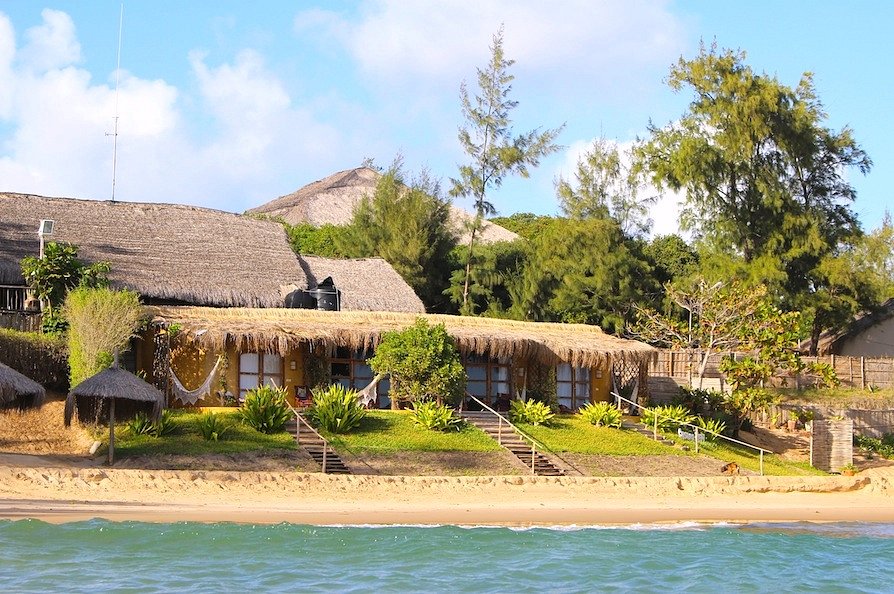
Just nine or ten timber-and-thatch casinhas, built on stilted wooden decks in the coastal dune forest, are the only development within the reserve, giving guests genuinely exclusive access to a protected wilderness that stretches from the Indian Ocean inland toward lakes, mangroves and open savanna.
The lodge is the result of a pioneering partnership between a philanthropic foundation and the local Chemucane community, which was granted a landmark ecotourism concession by the Mozambican government. Community-built and community-run, Anvil Bay has become a genuine economic engine for the area, and its low-impact, solar-powered design, down to minimal outdoor lighting to protect nesting turtles, reflects a serious commitment to conservation alongside luxury.
Anvil Bay’s ecotourism concession represents one of the more meaningful conservation partnerships in Mozambican tourism, the local Chemucane community holds the concession itself, meaning tourism revenue flows directly back into the community rather than to an external operator alone. This model, paired with the lodge’s genuinely minimal environmental footprint, has made Anvil Bay a frequently cited example of responsible tourism done well in Southern Africa.
Getting there
Anvil Bay is located at Ponta Chemucane within the Maputo Special Reserve in southern Mozambique, on a stretch of coastline bordered by the Indian Ocean and backed by the reserve’s lakes, mangroves and savanna. It’s the only accommodation permitted within this particular section of the park, which is a large part of what keeps the beach here so consistently empty.
The most popular way to arrive is by scenic private helicopter charter, taking around 30 minutes from Maputo International Airport and offering sweeping views across Maputo Bay and the reserve’s lakes and wildlife en route. Road transfer is also available, either from Maputo, roughly three hours, two of which run as a safari drive through the reserve itself, or from the Kosi Bay border post in South Africa, around two and a half hours away, making Anvil Bay a realistic add-on for travellers self-driving up from KwaZulu-Natal.
Where to stay
Anvil Bay’s nine to ten casinhas are tucked into shady coastal dune forest, each just a short walk from the beach and built with an elegant, back-to-basics aesthetic, hand-whittled wooden furniture carved in the lodge’s own on-site workshop, canvas windows that keep guests immersed in the surrounding forest sounds, and a minibar stocked daily with homemade rusk biscuits. Every casinha has an ensuite bathroom with both indoor and outdoor hot and cold showers, a king-size bed that can convert to twins, and a private deck.
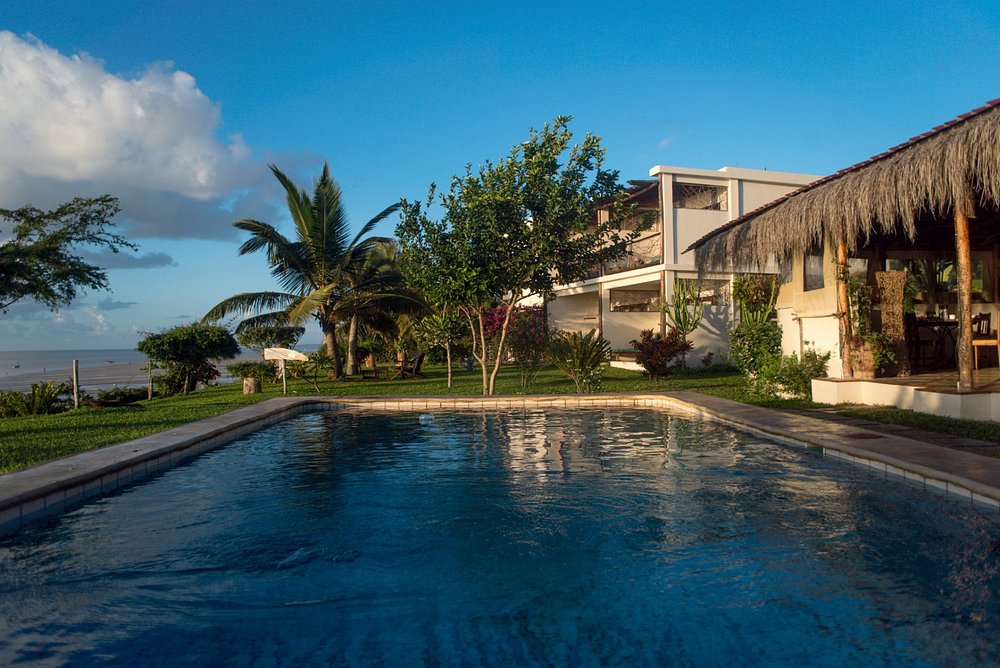
Rooms can accommodate an additional single bed or a camp cot for children, and the lodge’s central beach bar, lounge and restaurant sit between the two wings of accommodation, so guests can choose a room close to the action or one further along the beach for extra seclusion. Wi-Fi and laundry service are available in the main camp area.
On the island
Anvil Bay’s location inside a protected national park gives it a genuinely unusual activity list for a beach lodge, game viewing sits alongside classic water-based pursuits, with whales, dolphins, hippos and even elephants all realistic sightings across a single stay. Guided ocean safaris, snorkelling, fishing and beach walks make up the water-focused side of the programme, while the reserve itself offers guided nature walks and birdwatching through lakes, mangroves and savanna.
The lodge is also heavily involved in local turtle conservation, working alongside the Ponta do Ouro Partial Marine Reserve to monitor and protect nesting populations along this stretch of coast, guests visiting in nesting season may have the chance to learn directly about these efforts. Because Anvil Bay pairs so naturally with a classic Big Five safari in the private reserves of Kruger or KwaZulu-Natal, it’s frequently booked as the relaxing beach half of a broader Southern Africa itinerary.
Food and drink
Meals at Anvil Bay are served under stretched canvas covers on the beach, built around fresh breakfasts of fruit, cereal, yoghurt, cold meats and freshly baked muffins, with hot dishes cooked to order. The overall dining experience leans into the lodge’s back-to-basics, nature-immersed identity, simple, well-executed food enjoyed with sand underfoot and resident fish eagles calling overhead.
Seasons
The dry winter months from May to September offer the most comfortable temperatures for game viewing and reserve walks, alongside clearer water for snorkelling and diving. The warmer, wetter months from November to March bring warmer swimming water but a greater chance of storms, and align with turtle nesting season along this stretch of coast, a specific draw for guests interested in the lodge’s conservation work.
Perfect for
Anvil Bay suits adventurous couples and honeymooners drawn to its exclusive, barefoot-luxury setting, as well as families able to handle a genuinely wild, off-grid environment where game roams close to camp. It’s also a strong fit for conservation-minded travellers who want their stay to directly support both a protected reserve and a local community-run enterprise, and for anyone looking to pair a beach stay with a South African Big Five safari on the same trip.
Good to know
Anvil Bay sits within a malaria area and inside an active national park with genuine wildlife present, so guests should follow lodge guidance around movement after dark. The lodge is solar-powered and keeps outdoor lighting deliberately minimal to protect nesting turtles, so travellers should expect a genuinely low-impact, off-grid experience rather than resort-style infrastructure. Both helicopter and road transfer options should be booked well in advance given the lodge’s small size and popularity.
Questions
Yes, because the lodge sits inside the Maputo Special Reserve, sightings of elephants, hippos, whales and dolphins are all possible during a stay, alongside more typical coastal marine life.
Either a scenic 30-minute helicopter charter or a roughly three-hour road transfer, part of which runs as a safari drive through the reserve itself.
Yes, it operates through an ecotourism concession granted to the local Chemucane community, making it a genuine community-built and community-run enterprise.
Enquire
Share this stay
Similar stays
Extend Your Journey
Book your ideal Holiday
This for is for Agents only.